Rick Rule’s 2026 Playbook: Gold, Silver, Copper, Uranium, Junior Mining Companies, Energy Companies, and the 23 Stocks He Just Graded (13 of Which He Owns)
Legendary Investor Series

“I don’t need a friend who changes when I change and who nods when I nod; my shadow does that much better.”
— Plutarch (about 50 AD to 120 AD)
Not financial, investment, legal, or tax advice. Please read our full Disclaimer on the Disclaimer page. Accessible via the provided link and via the homepage menu. Continued reading constitutes your agreement to its terms.
Legendary investor Rick Rule doesn’t follow the crowd. He watches the crowd, sees things few other people are seeing, and then acts with conviction and patience. He is similar to the friend—the true friend—that the famous historian and writer Plutarch, in his quote above, alluded to.
This article is based on 4 interviews that Rick Rule gave between June 16 and June 18, 2026. These 4 interviews are a treasure trove of valuable information. He mentioned 23 companies (13 of which he confirmed he owns) and applies his famous 10-point ranking system (1 is best, 10 is worst). Please note that this ranking incorporates a combination of value and stock price. He maintains a “laundry list” of companies with specific entry prices. He buys when hate is at its peak and sells when the love gets too loud.
Like legendary investor Jim Rogers, Rick Rule stays within his circle of competence. For Rick Rule, that means natural resources and conventional financial services. He doesn’t touch tech. He can’t pronounce Nvidia (which he jokingly mentioned), let alone value it. When asked about SpaceX, he admitted he applied for an allocation and received zero. He doesn’t own it. He doesn’t even follow it.
The circle of competence varies. For some, like the up-and-coming and one day hopefully legendary investor, 24-year-old AI prodigy Leopold Aschenbrenner, the circle of competence is AI.
For Rick Rule, it is natural resources and conventional financial services.
If you are interested in Leopold Aschenbrenner, we covered him in 2 of the following recent articles.


Coming back to Rick Rule, in these 4 recent interviews, he laid out his entire worldview—from the arithmetic of US debt to the supply deficits in copper and uranium—and then went through company by company of 23 specific names. Of those, he told us exactly which 13 he owns right now. And critically, he identified the junior mining companies he is actively buying in this market.
Chapter 1: The Arithmetic of America – A 75% Dollar Decline in 10 Years
Rick Rule isn’t doom and gloom. He is not saying that the dollar is doomed. He is just sharing something that is much harder to see and much less spectacular: a steady decline in purchasing value over the next 10 years. Every year a little worse. How is Rick arriving at that conclusion?
Rick Rule looks at the United States government like a company. He is, after all, a credit analyst first. The numbers, he says, simply don’t add up.
On-balance sheet liabilities sit at roughly $40 trillion. Off-balance sheet promises—Social Security, Medicare, pensions—add another $120 trillion in today’s dollars. Against that, all American citizens combined have about $172 trillion in net worth. He doesn’t personalize this. He doesn’t blame Trump or the new Fed chair Warsh or Biden. He blames the arithmetic.
“It doesn’t matter if your name is Biden or if your name is Trump or if your name is Warsh or your name is Greenspan. The truth is that mathematics means that we’re going to attempt artificially low interest rates and we’re going to attempt quantitative easing separate and apart from the personalities.” Rick Rule (Interview 2, 21:42–22:15)

Source: https://www.usdebtclock.org/
The most politically palatable way out is to inflate the debt away. Drive up inflation so much that the real value of the debt shrinks. Rick Rule expects the dollar to lose 75% of its absolute purchasing power over the next decade—a repeat of the 1970s.
“It is likely, I think, that the US dollar loses 75% of its absolute purchasing power in 10 years. We did that in the 70s.” Rick Rule (Interview 2, 13:38–13:47)
He draws a direct line to 1975. Congress allowed rates to rise, gold fell 50%, they lost their nerve, cut rates, and gold ran from $100 to $850 in six years. He expects the same cycle to play out again. This time, he wants to be ready.
“This chart remembers reminds me of nothing so much as 1975. The first time that inflation became a real uh political issue in the United States and the political class uh I was going to say caused rather allowed the US interest rate to go up. Uh and that demolished the gold price uh the gold price fell if my memory serves me correctly 50%. It also destroyed the long bond market. Did substantial damage to the equities market. Was harmful for new home sales and consumer durables like automobiles. Nine months into the experiment, Congress lost their nerve, caused the Fed to lower the interest rate fairly precipitously, and that set gold off on a six-year romp from a low of about $100 an ounce to a high of $850 an ounce.” Rick Rule (Interview 1, 2:46–3:31)
In a nutshell, think of it as gaining weight. Gaining 2 pounds in a year is not great, but not horrible either. Do it over 10 years, and you are 20 pounds overweight. That is what is happening with the US dollar. Every year a bit less valuable. You won’t see it against other western currencies like the Euro, the British Pound, or the Japanese Yen. And you won’t see it in the DXY dollar index, as that is based on the same western currencies. You won’t see it there, because whatever problems we have, their problems are worse.
But you will see it in what you can buy with your dollar at the supermarket, for example. Butter that now costs $4, in 10 years may cost $16. That is the US dollar over the next 10 years in a nutshell.
Chapter 2: Gold, Interest Rates, and the Summer Buying Opportunity
Gold recently hit an all-time high near $5,300 and has pulled back to roughly $4,400 (as of June 17, 2026). Higher US interest rates have strengthened the dollar, putting pressure on the nominal gold price. This is the temporary dynamic Rick Rule is watching.
He explains it simply: higher rates make the dollar stronger, and gold is denominated in dollars. Also, higher rates give people a reason to own Treasury bonds instead of gold. But he believes this is temporary.
“Uh, for the price of gold in general, uh, I I think what you see on that chart is the effect of higher US interest rates. Okay. Uh, pretty clearly uh, gold is denominated in dollar. Higher interest rates generates a stronger US dollar. Ergo uh something denominated in dollars tends to fall in nominal pricing. Uh also because of higher interest rates uh people look at the yield on the US 10-year Treasury and they understand that that’s a foregone yield in gold. It wouldn’t surprise me this summer for gold to be weaker yet.” Rick Rule (Interview 1, 1:53–2:29)
That weakness is what he’s waiting for. He has a shopping list, and he’s hoping the market gives him lower prices this summer so he can accumulate. He welcomes the gold weakness.
“I welcome frankly the lower gold price for the same reason in a sense that I welcome the lower oil price. I’d like to buy more gold and I suspect the Fed is going to accommodate me if in fact we see an interest rate rise or at least if the long-term rates are allowed to rise in the market. Gold should stay weak through the summer.” Rick Rule (Interview 3, 7:44–7:58)
If you are bullish on metals (including gold and silver), mining companies or even long-dated call options on miners can be a great way to leverage one’s investments. Some people recommend buying on margin or even getting involved with futures. That can work, but the downside risk (margin calls and forced liquidation) is extreme. Options have their risk too, but if you buy a simple call, you can never lose more than the premium you paid. No margin calls there.
If you want to learn more about the conventional leverage ladder (physical, ETF, major miners, junior miners, exploration companies) and the unconventional leverage ladder (options on ETFs and options on major miners), the following Fringe Finance Report article covers all that.
The Gold & Silver Bull Market: Your Golden Opportunity from 1x to 100x


In a nutshell, gold and silver are the original money. The Bible talks about 30 pieces of silver for Judas. The thing with gold and silver is that it can’t be printed. Annual gold and silver production adds about 1% per year to the gold and silver supply, meaning the supply doesn’t change that much. With fiat currencies (U.S. dollar, etc.) running elevated inflation—the polite word for money printing—over time, we will all need to use more and more printed money to purchase the same amount of gold and silver. Meaning gold and silver prices will go up by a lot—over the years.
Chapter 3: Oil, the MOU, and the Sustained Lack of Capital Investment
The biggest piece of news in June 2026 was an apparent agreement between the United States and Iran around the Strait of Hormuz.
“Biggest piece of news obviously is an apparent agreement between the United States and Iran uh around the Straits of Hormuz. Uh when I say apparent um we’ll wait. We’ll see. Uh hopefully uh peace breaks out.” Rick Rule (Interview 3, 4:09–4:25)
If the peace holds, Rule thinks it might be possible but not certain for oil to test $60 in the near term. The reason isn’t just increased supply—it’s demand destruction in poor countries where people couldn’t afford $100+ oil.
“If the peace holds the oil price goes a little lower than people think. Uh the reason for that isn’t so much the increased supply but rather the fact that very high prices in poor countries I think has led to some demand destruction…… I’m not saying this is going to occur or it’s not going to occur, but I’m going to put everybody on notice to be ready for this.” Rick Rule (Interview 3, 4:34–6:03)
But the bigger issue—beyond the Iran war—is the long-term supply problem. The oil industry has been underinvesting in sustaining capital to the tune of over a billion dollars a day for years. “Sustaining capital investments” sounds so academic, but it is very important. It is essentially the money an oil producer needs to invest year after year to keep production steady. Without it, production will decrease—year after year. This is like a fit person who stops exercising. He will be okay for a while, while his body gets worse week by week.
“In the longer term, as I’ve been saying to you in interviews, for years, the lack of sustaining capital investment made by the oil industry has exceeded a billion dollars a day for a substantial period of time. This will impact our ability to produce and we will have scarcities in the future that aren’t war related. They’re due to the fact that we’ve underinvested in sustaining capital.” Rick Rule (Interview 1, 50:32–50:51)
The war made this worse. No one was making sustaining capital investments while fighting, and existing infrastructure was damaged.
“That circumstance got worse during the war. Obviously, none of uh Kuwait, Saudi, Iran or or the UAE was making sustaining capital investments when people were blowing them up and they were fighting a war. And in addition, the existing capital stock in the Middle East, a lot of it uh was damaged and needs to be repaired.” Rick Rule (Interview 3, 6:34–6:49)
His strategic advice: Use any short-term oil crash to build a long-term position.
“So the circumstance that I see is a potential oil price decline and a potential decline in the prices of oil stocks that would allow for a very good entry point. For those people who agree with me that we will have uh sharply higher prices in the future as a consequence of supply shortages that are due to lack of investment rather than to war. Forewarned is forearmed.” Rick Rule (Interview 3, 6:57–7:13)
Higher energy prices also function as a tax on the economy, slowing growth in the near term.
“Higher energy prices function as a tax and all taxes are bad for the economy. So in the near term my economic outlook is not good.” Rick Rule (Interview 1, 32:17–32:25)
In a nutshell, Rick Rule talked about the coming long-term oil crisis way before the Iran war, as a result of oil companies not investing enough to sustain the same level of oil production. The Iran war doesn’t make the long-term situation better. It made it worse. This is another multi-year play.
Chapter 4: Uranium – The Easy Money Is Over, But the Sure Money Is Ahead
Rick Rule has been bullish on uranium for years. He says the easy money has been made. But the sure money is ahead.
“You know, you and I have talked a lot about uranium over the years. Uh I I would suggest that the easy money in uranium has been made, but the sure money in uranium is ahead of us. Uh for a whole bunch of reasons. And by the way, I’m not talking about in weeks. I’m talking about in years.” Rick Rule (Interview 1, 38:38–38:55)
He then explains what has changed to make the sure money ahead.
“First of all, there’s a large deficit between what we produce and what we consume. That deficit is being accommodated right now by above ground stocks, but those above ground stocks fall every month. Meanwhile, new plant construction around the world, but particularly in China is extraordinary. So demand is increasing despite the fact that supply is fairly static and going sideways. When we use up the buffer in above ground inventories, there’s only one way that the price can go.” Rick Rule (Interview 1, 39:25–39:54)
He also notes that uranium has gone from a pariah to politically correct. The Strait crisis has reacquainted governments with the concept of energy security.
“The unsung beneficiary, if there is a beneficiary of war, of the conflict of the Straits of Hormuz is uranium because it reacquainted uh governments and investors around the world with the concept of energy security. Dialing oneself back to 1973 and the Arab oil embargo, the last time that energy insecurity was large on everybody’s horizon. One consequence was the development of the French nuclear fleet, now the fourth largest in the world. Another consequence was the development of the Japanese nuclear fleet, now the third largest in the world.” Rick Rule (Interview 1, 40:33–40:58)
In a nutshell, in this new multipolar world of ours, the Iran war re-educated countries around the world that oil today can be gone tomorrow, and that a warehouse of uranium is enough to provide a country with electricity for years.
Chapter 5: Copper – 30 Years of Underinvestment, 15 Years of Demand
Copper is the metal of electrification—wires, EVs, AI data centers. And the world has been ignoring it for three decades.
“There’s zero doubt that if you look 5 years out, there will be production shortages. We have underinvested in copper as a species for 30 years, and it’s a long-term capital intensive business. You can’t undo 30 years of sin in 5 years. No matter what we do, short of a depression, uh we will not be able to balance supply and demand because supply is falling.” Rick Rule (Interview 1, 30:55–31:21)
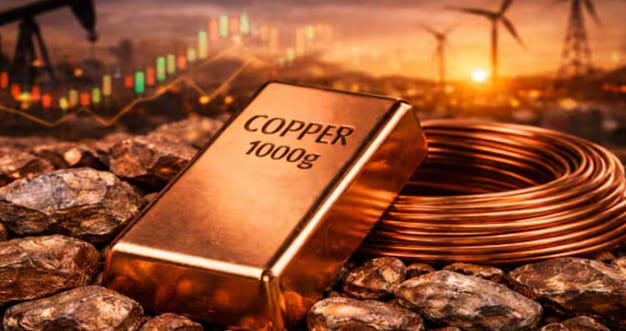
He cites a study from mining metals week in London: the 10 largest copper companies need to spend $250 billion in constant dollars just to maintain last year’s production.
“At uh mining metals week in London, pardon me, at the end of last year, there was a a paper delivered that suggested that the 10 largest copper companies in the world needed to spend $250 billion..., which is to say not adjusted for inflation to maintain last year’s copper production numbers.” Rick Rule (Interview 1, 33:08–33:26)
He concludes with a staggering statistic. If the AI data center investments that are publicly disclosed occur, we will need as much copper in the next 15 years as we have mined in recorded human history.
“If the data center uh um investments that have been publicly disclosed occur, we will use according to my friend Robert Freedelland as much copper in the next 15 years as we have mined in human history in recorded human history.” Rick Rule (Interview 1, 34:06–34:29)
In a nutshell, there is limited copper supply with insanely increasing copper demand. These are sweet words of love for any investor. Of course, this will play out in years and not months.
Chapter 6: The Strategy Shift – Muted Markets
If you grew up with Star Trek, finding metals and minerals is easy. Have your spaceship in orbit turn on the sensors, and presto, you know exactly which metal is where, how deep it is, and how much is there. Sadly, outside the world of Hollywood, it is much more low-tech.
You need to drill holes in the ground (deep holes) and make judgments based on what you find. Think about a large round cake with islands of caramel in it. You suspect it is there, but you don’t know where. What do you do? You stick a plastic straw in different parts of the cake to find out where the caramel is. That is what exploration miners do. No plastic straw, of course.
Rick Rule has noticed a structural change in the market. Good drill holes are no longer being priced away immediately. This is a gift for junior mining investors. Why does this matter?
“Right now, the market response to good drill holes is much more muted than it used to be. Um, it used to be that the market’s response to a successful drill hole was to price away the information that they got from the drill hole. So, uh, the success was monetized before you could get a big enough position to take advantage. That isn’t true right now.” Rick Rule (Interview 4, 0:09–0:28)
In a nutshell, in past bull markets, a good drill hole would send a stock soaring before you could build a position. That’s not happening now. The market is skeptical. That means you can buy after confirmation and still get a good price. This is particularly important when investing in junior mining companies and exploration companies.
Chapter 7: A Mid-Tier Gold Miner - The Saturn Metals (STRUF) Teaser – Rating: 4
This is one of the more interesting investment opportunity stories Rick Rule shared in his June 2026 interviews. It illustrates exactly how he thinks in the junior mining space.

It’s an open-pit heap leach idea in Australia that falls through the cracks.
“I have Saturn as a four [1 is best, 10 is worst]. I had it as a five, but uh the current gold price malaise has caused the stock to sell off. Here here’s the thing with Saturn. Uh it is a open pit heap leach idea in Australia where that form of play is fairly rare. So it isn’t well followed by the Australian analysts because it’s in Australia, not in North America. The North American analysts that do open pit heap leach uh are not as attracted to it as they might be to a Nevada name or an Ontario name. It sort of falls through the cracks.” Rick Rule (Interview 3, 58:31–59:10)
More about Saturn Metals further below.
In the following sections, we will cover the following:
Chapter 8: The Premier Gold Producers (5 companies) – Low-Risk Foundation
Chapter 9: The Premier Silver Producers (4 companies) – Low-Risk Foundation
Chapter 10: The Copper Giants (4 companies) – The Long-Term Supply Story
Chapter 11: The Uranium Powerhouses (5 companies) – Energy Security Plays
Chapter 12: The Junior Mining Companies (3 companies)
Chapter 13: Energy (2 companies)
Chapter 14: The 4 Video Interviews Used for This Article